ServicesWater Extraction
Water Extraction in Mechanicsville
Water sitting on your floors keeps soaking into carpet pad, drywall and subfloor for as long as it stays there. We pull it out with heavy extraction equipment, check where it traveled and get drying started. We aim to have a crew at your door within an hour of your call.
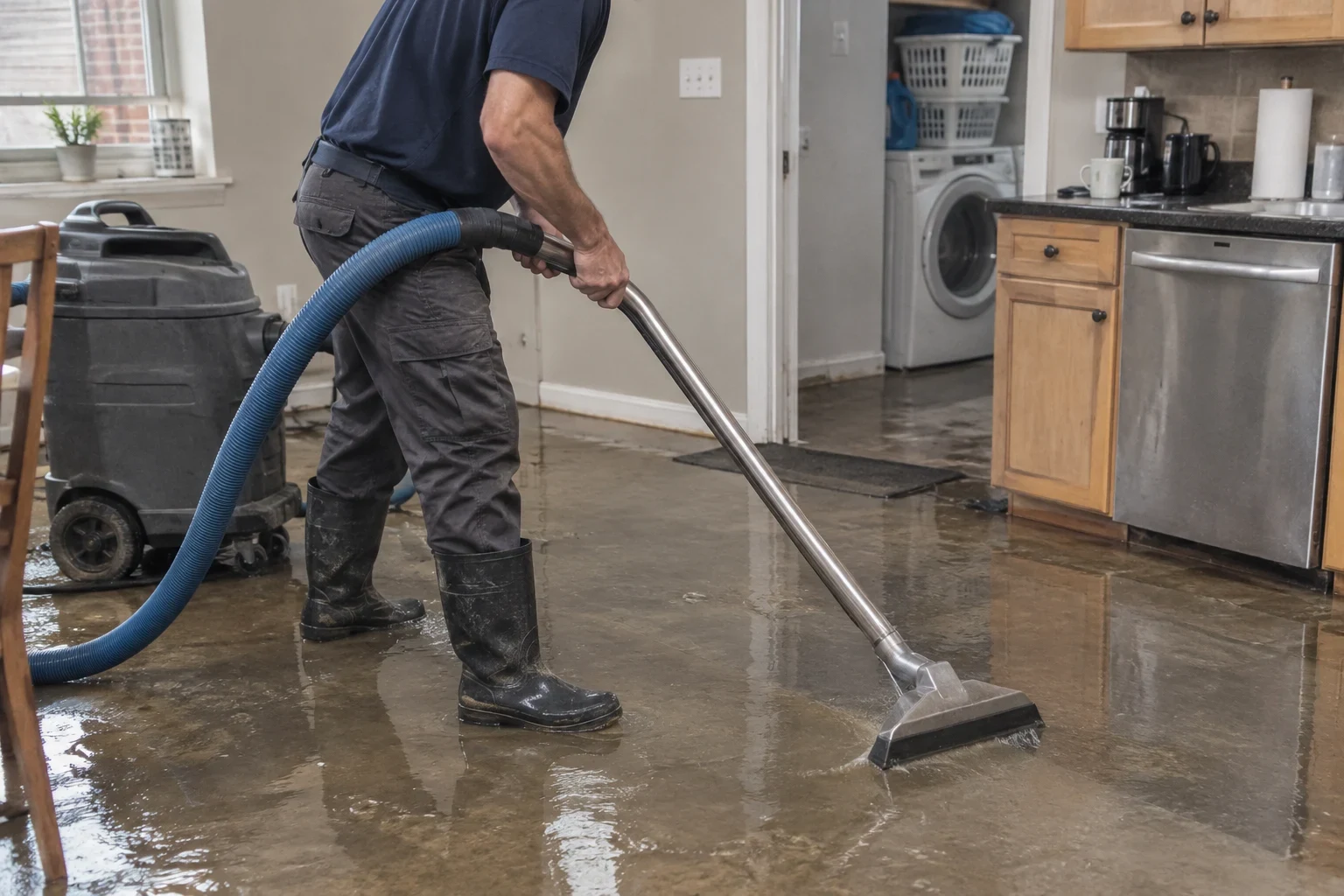
Get the water out first
Water extraction is the first job after a leak, burst pipe or overflow. We remove the standing water, then go after what has soaked into carpet, pad, rugs and the edges of walls. The more water we pull out now, the less the drying equipment has to do later.
It matters because wet materials don't stay put. Drywall wicks water up from the floor. Particleboard subfloor swells. Wet insulation stops insulating, so your home feels damp and your heating or cooling runs harder to keep up. Getting the bulk of the water out early protects the structure and keeps those running costs from creeping up.
Once the water is out, most jobs move straight into drying and dehumidifying. We tell you plainly what we found and what comes next.
What we do during extraction
Pumping out standing water
We pull water off the floors and out of basements and crawl spaces with pumps and vacuums. A truck-mounted unit or a portable one, based on how much water is there and how far the hoses need to reach.
Getting water out of the pad
Our tools put body weight on the carpet while they suck, so water comes up out of the pad underneath, not only off the top fibers. When the pad can't be saved, we say so and pull it up.
Finding where the water went
Meters on walls, trim and subfloor show us how far the moisture spread. Water runs under flooring and behind baseboards, so the wet spot you can see is usually smaller than the real one.
Lifting furniture off the floor
We carry furniture out of the wet area or set it on blocks and pads. That keeps wood legs from drinking up water and staining the carpet.
A record for your claim
We take pictures of the source, the water and each room it reached, along with notes. You can pass that record straight to your insurance company.
When it's time to call for extraction
Puddles inside the house
Standing water anywhere in your home should come out today. Towels and a shop vac fall behind fast once it's more than a small spill.
Carpet that feels wet underfoot
When carpet gives a little and feels damp as you walk, the pad below is holding a lot more water than you can see on top.
Water under the house
Heavy rain or a sump pump that quits can leave water sitting in a basement or crawl space. Through a muggy Virginia summer, that water grows mold and keeps every room above it damp.
Dark or swollen baseboards
Staining or puffing along the bottom of a wall means water is climbing into it. Get it out before the drywall goes soft.
A sudden musty odor
If the house smells damp soon after a leak, water is likely hiding somewhere out of sight.
How the job runs
- 1
Stop the source
When we arrive, we make sure the water is shut off or the leak is contained. We check for electrical hazards before anyone walks through wet rooms.
- 2
Walk through and measure
We look at every affected room and take moisture readings. You hear from us what got wet and what we plan to do before we start.
- 3
Extract
We remove standing water first, then go over carpet and pad with extraction tools until we've pulled out as much as we can. Wet pad or ruined materials come out if they can't be saved.
- 4
Set up for drying
With the water out, we place air movers and dehumidifiers and explain how long they need to run. We come back to take readings until the materials are dry.
What moves the price
Every water loss is different, so extraction doesn't come with one set price. The two biggest things are how much water got in and how far it traveled. After we look and measure, you get a written estimate that lists the work line by line. If you're filing a claim, we work with most major insurance companies.
- How much water and how many rooms
- One wet bedroom takes far less than a basement with water across the whole floor. Bigger areas and deeper water need more machines on site and more hours to clear.
- Where the water came from
- A broken supply line puts out fairly clean water, and that is the simplest to handle. Overflow from a washer or dishwasher carries soap and dirt, so it needs more care. Anything from a sewer line moves into sewage cleanup, with more protective gear and proper disposal.
- What the floors are made of
- Carpet and pad soak up water one way, hardwood and laminate another, and tile mostly sheds it. When pad is past saving, the cost of pulling it up and hauling it off gets added.
- Time since the leak started
- After a day or so, water has crept further into drywall and subfloor. That means more area to open up and extract.
Common questions about water extraction
Something not covered here? (804) 570-1965
What should I do until your crew shows up?
We aim to have a crew at your door within an hour of your call. Until then, close the main water valve if you know where it is. If you can reach the breaker panel without standing in water, cut power to the wet rooms. Lift small items, rugs and electronics off the floor.
Is my carpet a loss?
Not always. Clean water caught early often leaves carpet that can be dried and kept. The pad is a different story, since it holds the most water and costs less to replace than to dry. We take readings first and then tell you straight what's worth keeping.
Does homeowners insurance pay for this?
A lot of policies pay for sudden damage, like a pipe that bursts, but each policy reads differently. We work with most major insurance companies. We hand you photos and moisture readings to support your claim, and the adjuster decides what's covered.
Can I just use my shop vac?
On a small puddle on tile, it may do. On carpet, pad or a basement floor, a household vac leaves most of the water in place. What stays behind keeps the house humid, makes your air conditioner run longer and gives mold a start.
Is drying a separate step?
Yes, and it's needed on nearly every job. Extraction takes out most of the water, but framing, drywall and subfloor stay damp inside. Drying and dehumidifying pulls that last moisture out so nothing is left wet behind the walls.
Water on the floor right now?
Get the water out before it spreads into walls and subfloor. We serve Mechanicsville and nearby towns, and the on-site inspection is free.