ServicesFlood Cleanup
Flood Cleanup in Mechanicsville
When storm water or rising groundwater gets into your home, we pump it out, haul away what can't be saved, clean and sanitize what's left, and dry the structure. That way your walls and floors don't hide moisture that turns into mold or higher cooling bills.
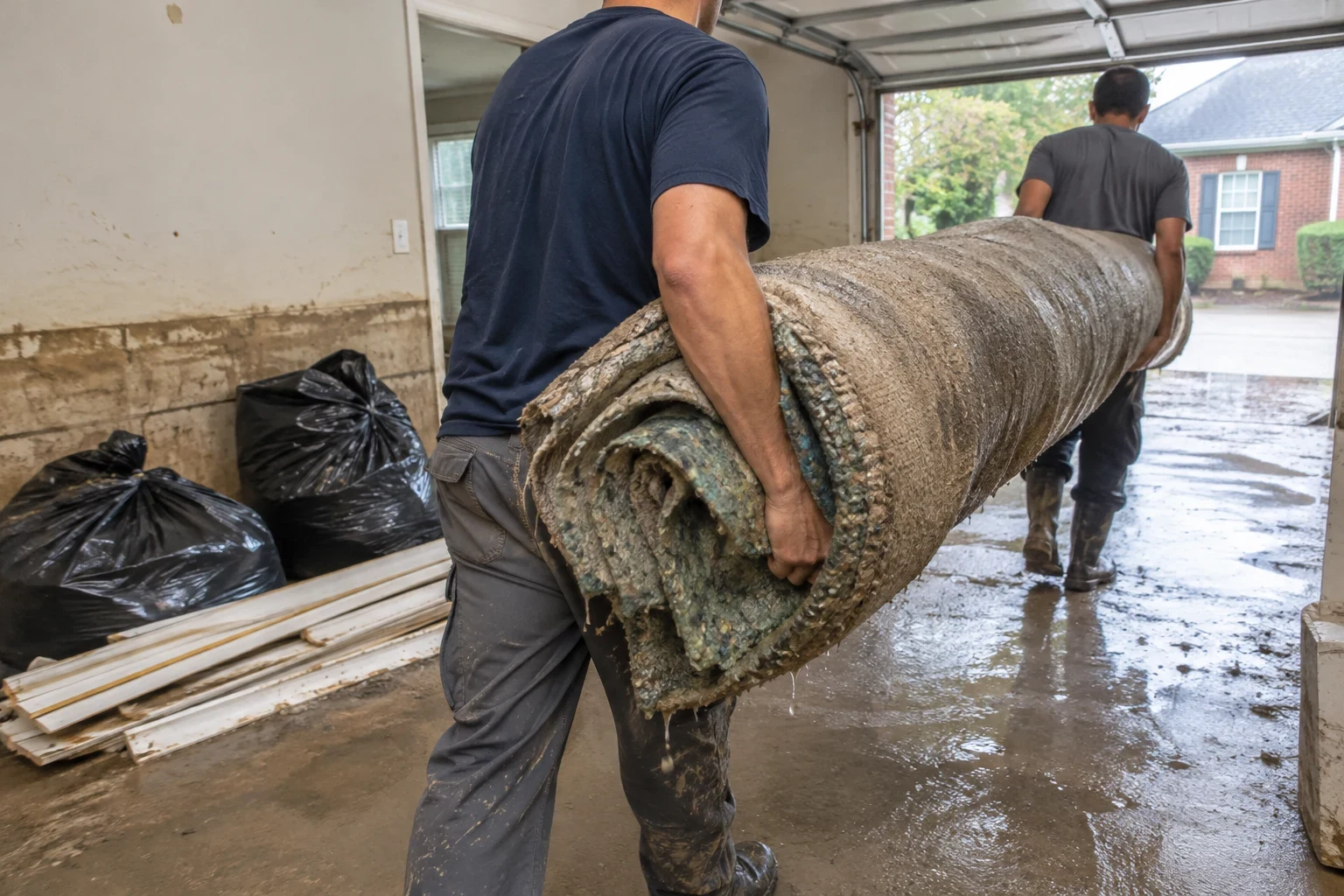
Flood cleanup: what it is and when to call
This service covers water that got into your home from outside. Think heavy rain coming in under a door, a creek spilling over, or groundwater pushing up into a crawlspace or basement. That water brings mud, lawn chemicals and often sewage with it, so we handle it as contaminated. Pumping it out is only the start. Carpet pad, drywall and insulation that sat in it usually need to be removed.
We inspect before we pull anything and tell you straight what has to go and what can be saved. Plenty of homes around Mechanicsville are built over crawlspaces, and flood water tends to pool there where nobody sees it.
There's also a running cost most people don't think about. Soaked fiberglass insulation quits insulating, and a wet crawlspace keeps the air inside humid, so the AC runs longer all summer. Drying the structure all the way through, not just until it feels dry, keeps your home comfortable and your power bill where it should be.
What our flood cleanup includes
- Water and mud removal
- Pumps and extraction units pull out the standing water first. Then we shovel and squeegee out the silt, since it holds bacteria and keeps the surface under it wet.
- Tear-out of soaked materials
- Wet carpet pad, baseboards, insulation and the bottom of the drywall come out. We cut the drywall in a straight line above the waterline, then bag everything and haul it off.
- Cleaning and sanitizing
- We wash studs, subfloor, slab and anything worth saving, then apply an antimicrobial. Flood water is never clean, so anything it touched gets treated.
- Structural drying
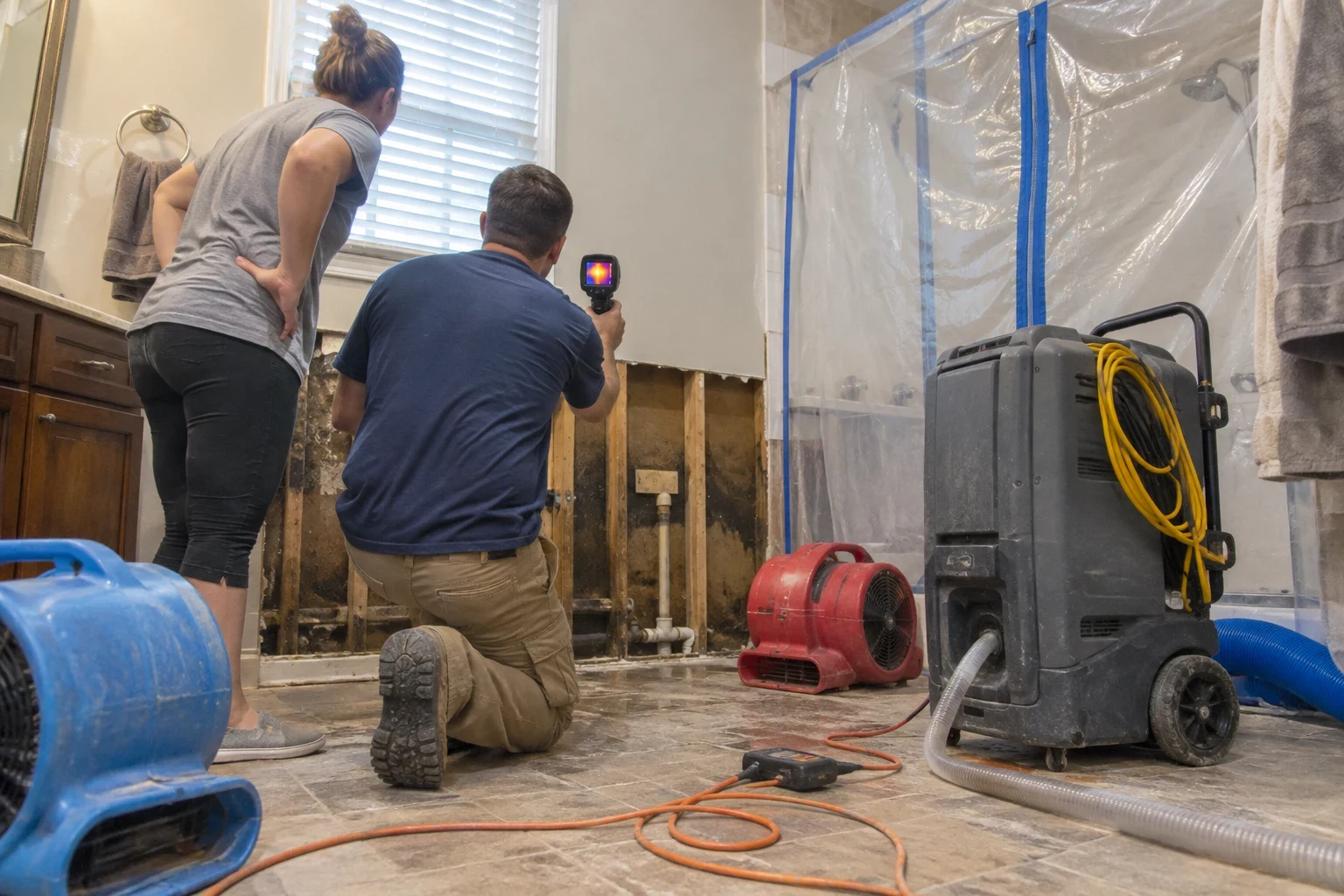
- Dehumidifiers and air movers keep running until our meters show the wood and subfloor have reached normal moisture levels. You can read more about this stage on our Drying and Dehumidifying page.
- Crawlspace, insulation and duct check
- We go under the house, pull down wet insulation batts and look at ductwork that sat in water. Soaked or loose ducts leak the air you pay to cool and heat, so we note what needs replacing.
- Photos and readings for your claim
- We photograph the damage and log moisture readings room by room. We work with most major insurance companies, and we'll explain what your adjuster will want to see.
Signs you need flood cleanup, not just a mop
Water came in from outside
If it came under a door, through a foundation wall or up a floor drain after rain, treat it as contaminated. Household cleaners won't make it safe.
A waterline on the walls
A tide line on drywall means water wicked up inside the wall cavity. The wet part inside is often higher than the line you see.
A musty smell a day or two later
That smell means moisture is still trapped somewhere. Mold can start growing within a day or two on wet drywall and wood.
Soft or cupping floors
Hardwood that cups or a subfloor that gives underfoot is holding water below the surface.
Water standing in the crawlspace or basement
Water under the house raises humidity upstairs. Floors feel clammy, rooms feel stuffy and the AC can't seem to keep up.
How a flood cleanup job runs
- 1
Your call and our arrival
Tell us what you're seeing and where the water is. For emergency calls we aim to have a crew at your door within an hour of your call. Before anyone walks through standing water, we check for electrical hazards.
- 2
Free on-site inspection
We walk your home with moisture meters, mark how far the water traveled and photograph everything. You hear what has to come out and why before we start.
- 3
Extraction and tear-out
We pump out the water, clear the mud and remove soaked materials. Furniture and belongings that can be saved get moved out of the way and protected.
- 4
Clean, sanitize and dry
Every exposed surface gets cleaned and treated. Drying equipment goes in, and we check readings every day and move or adjust it until the numbers come down.
- 5
Final readings and what's next
When the structure reads dry, we pull the equipment and show you the numbers. If walls, floors or insulation need putting back, our Repairs and Rebuild crew picks up from there.
What affects the cost of flood cleanup
Every flood is different, so we price the job after we've seen it, not before. You get a written estimate with each line explained. Most of the cost comes down to how far the water spread and what it soaked.
- How much of the house got wet
- One room with a few inches of water is a much smaller job than a whole finished basement or a full crawlspace.
- How long the water sat
- Water that sat for days wicks higher into walls and may have started mold. That can add Mold Remediation to the job.
- What the water carried
- If sewage came in with the flood, we follow Sewage Cleanup procedures. That means more protective gear, more disposal and more sanitizing.
- Materials that got soaked
- Carpet, hardwood, insulation and finished drywall each come out and get handled differently.
- Access
- A tight crawlspace or a finished basement with built-ins takes more labor than an open slab floor.
Flood cleanup questions
Something not covered here? (804) 570-1965
Will my homeowners insurance cover flood cleanup?
Often not. Standard homeowners policies usually exclude surface flooding, which falls under separate flood insurance. Water from a burst pipe or some backups may be handled differently. We work with most major insurance companies and document everything, but your adjuster makes the coverage call.
Can I clean this up myself?
A small amount of clean water from inside the house, maybe. Flood water from outside is different. It carries bacteria and soaks into wall cavities and subfloors where a shop vac and fans can't reach. If it isn't fully dried, you end up paying again for mold work.
Do I have to throw out my carpet?
Carpet pad that soaked in flood water has to go. The carpet itself usually does too, because it can't be reliably sanitized after contaminated water. We'll show you what we find before anything gets pulled.
Will wet insulation dry out on its own?
Not well. Fiberglass batts that got soaked sag, hold moisture against the wood and stop doing their job. That shows up as cold floors in winter and an AC that runs longer in summer. We remove it so it can be replaced with dry insulation.
How long until we can use the rooms again?
It depends on how much got wet and what it's made of. Drying usually takes several days, and we check readings daily so equipment doesn't run longer than needed. Rebuilding comes after the structure reads dry.
Can we stay in the house during cleanup?
Most families can if the water stayed in one area and the power is safe. The equipment is loud and runs around the clock. If sewage came in or the damage is widespread, we'll tell you honestly whether it makes sense to stay somewhere else for a few days.
Get the water out and the house dry
Tell us what happened and we'll head your way. The on-site inspection is free, and you'll know what has to come out before any work starts.