ServicesDrying and Dehumidifying
Drying and Dehumidifying in Mechanicsville
Pulling up standing water is only step one. Moisture soaks into the subfloor, the framing, insulation and the drywall, where you can't see it. We place drying equipment where readings say it's needed, measure as the job goes, and pack up only when your home's materials read dry.
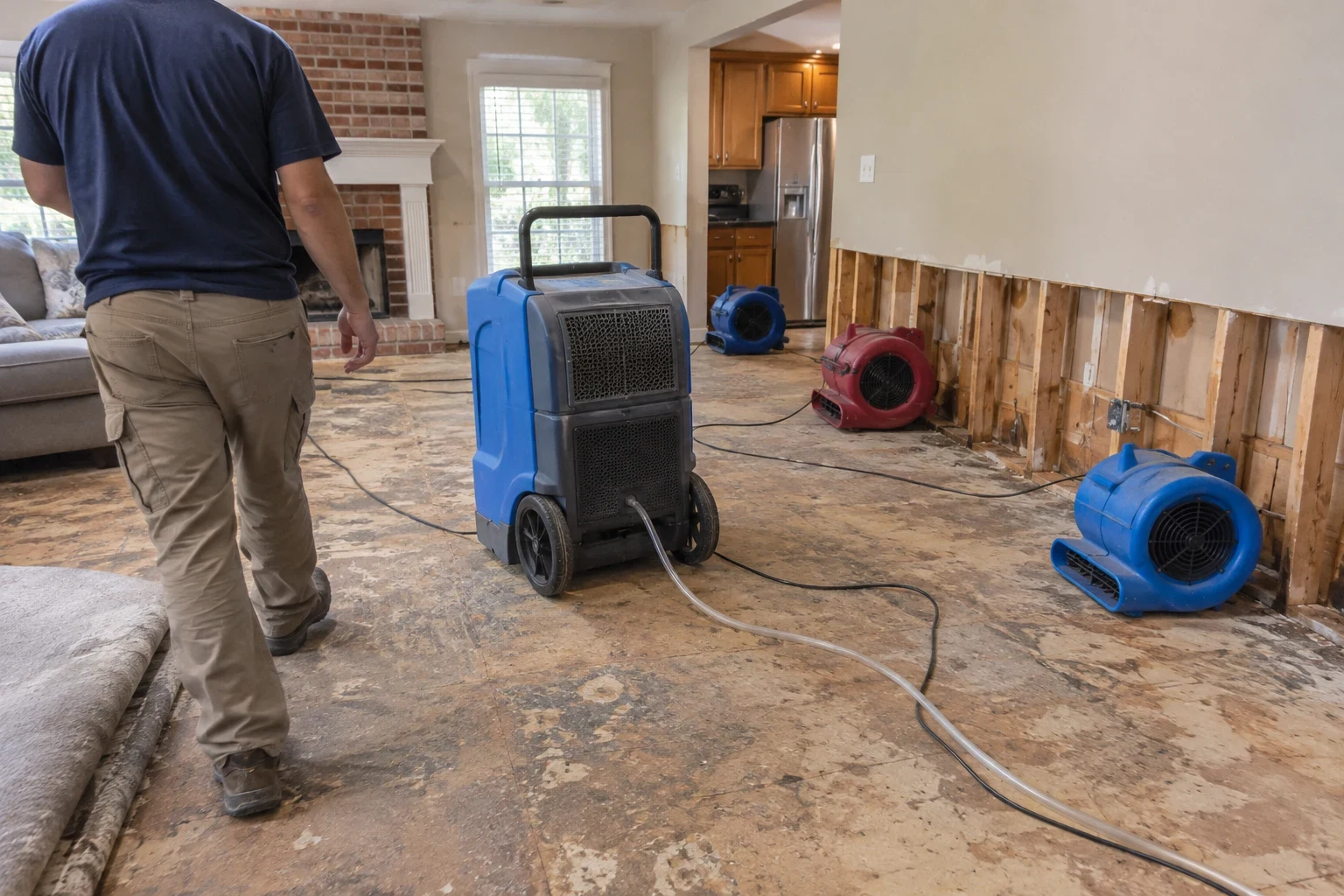
Dry on the surface is not dry
Carpet can feel dry in a day while the pad, the subfloor and the bottom of the drywall still hold water. That trapped moisture is what leads to swollen trim, cupped wood floors, musty smells and mold. Drying and dehumidifying pulls it out on purpose, with air movers to speed up evaporation and dehumidifiers to take that moisture out of the air.
We use moisture meters to find where the water went, then measure again until the numbers match dry areas of the same house. We do not guess, and we do not leave equipment running longer than it needs to.
There is a comfort and cost side too. Damp insulation loses much of its ability to hold heat, and humid indoor air makes your AC work harder to keep you comfortable. Getting your home properly dry helps it feel right again and keeps your utility bills from creeping up.
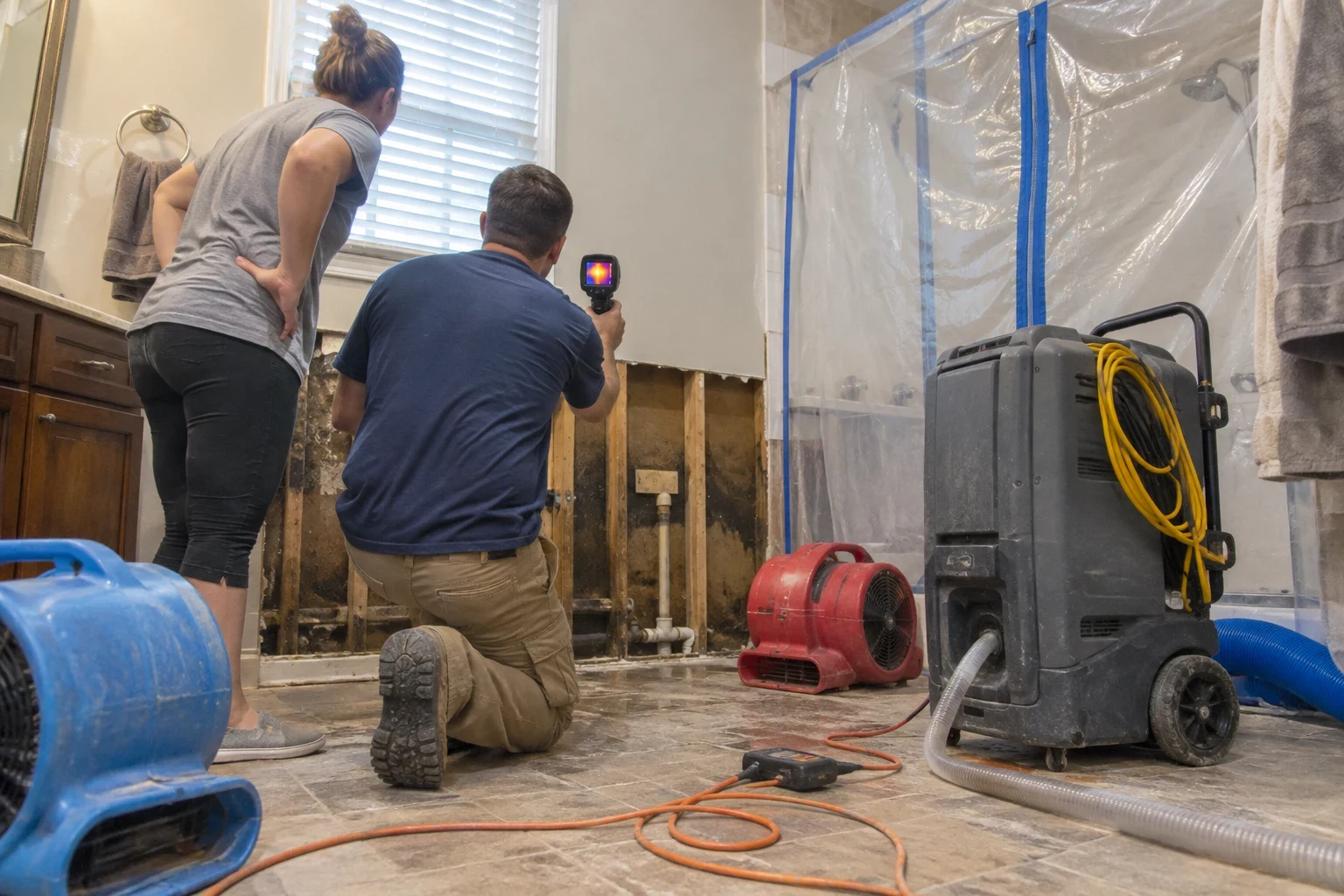
What the drying work includes
- 01
Moisture mapping
We check walls, floors, ceilings and cabinets with meters and mark where the water spread. This shows us what needs drying and what is already fine.
- 02
Air movers placed with a plan
Fans go where they push air across wet surfaces, not just anywhere in the room. We angle them along walls and under cabinets where water sits.
- 03
Dehumidifiers sized to the space
Wet materials release water into the air. Commercial dehumidifiers pull it back out so it does not settle into dry rooms or your HVAC system.
- 04
Opening up hidden pockets
Sometimes we drill small holes behind baseboards or pull a toe kick to get air into wall cavities. We tell you before we do it and explain why.
- 05
Daily readings and adjustments
We come back to take readings, move equipment and pull units from areas that are done. You see the numbers, not just our word.
- 06
Crawl space and basement drying
Many homes around here sit over crawl spaces that trap humid air. We dry those areas too, since damp air under the floor works its way up into your living space.
Questions about Drying and Dehumidifying?
Call(804) 570-1965Signs your home still needs drying
A musty smell that stays
If a room smells damp days after a leak, moisture is still trapped somewhere. That smell usually comes before visible mold.
Baseboards or trim pulling away
Swollen or split trim means water wicked up into the wall. The drywall behind it is likely still wet.
Wood floors cupping or buckling
Edges rising on hardwood boards point to moisture underneath. Drying the subfloor early can sometimes save the floor.
Sticky air and an AC that runs nonstop
High indoor humidity after a leak makes rooms feel clammy and keeps your system running longer. That is water in the air your home is still giving off.
Soft spots or stains on drywall
Bubbling paint, soft drywall or a tide line on the wall means water is sitting inside. It will not dry on its own behind paint.
How a drying job runs
- 1
You call, we come out
We offer emergency water damage response and aim to have a crew at your door within an hour of your call. If water is still standing, we start with water extraction first.
- 2
Inspect and measure
We walk your home with moisture meters and a thermal camera, find the edges of the wet area, and take photos. You get a plain answer on what can be dried and what has to come out.
- 3
Set up the equipment
Air movers and dehumidifiers go in where the readings say they are needed. We run cords safely, keep walkways clear, and show you what to leave alone.
- 4
Check in and adjust
We return to take new readings and record them. Units come out of rooms as those rooms reach dry, which keeps noise and power use down.
- 5
Confirm dry and hand off
When every reading matches dry areas of the house, we pull the last equipment. If anything needs replacing, our repairs and rebuild crew takes it from there.
What moves the cost of drying
Drying is priced by how much is wet, how deep the water went and how long the equipment runs. After the inspection you get a written, line-item estimate, so each charge is spelled out before work goes on. We work with most major insurance companies, and the moisture logs and photos we keep each visit give your adjuster a clear record of the drying.
- Size of the wet area
- One bathroom takes far less equipment than a finished basement. More square footage means more air movers and dehumidifiers.
- What got wet
- Hardwood, plaster and dense subfloor dry slower than carpet over concrete. Slow materials mean more days of equipment.
- Clean or dirty water
- A supply line leak is simpler than water that came in from outside or a drain. Dirty water may need cleaning or sewage cleanup before drying.
- How fast you call
- Water keeps spreading into walls and floors for hours. The sooner drying starts, the less material has to come out and the shorter the job.
Questions about drying and dehumidifying
How long does it take to dry my home?
Most jobs take a few days, but it depends on the materials and how far the water spread. Hardwood floors and plaster walls take longer than carpet and drywall. We go by moisture readings, so the job ends when the numbers say dry, not on a set day.
Can I just use my own fans and a box store dehumidifier?
For a small spill caught right away, maybe. For a leak that soaked into walls or under flooring, household units do not move enough air or pull enough water. They also cannot tell you when the inside of the wall is dry.
Will the equipment run up my power bill?
It does use electricity while it runs. We pull units from each room as soon as it reads dry to keep that down. Leaving damp insulation and humid air in place tends to cost more over time through a harder working HVAC system.
Do I have to leave my home during drying?
Usually no. The equipment is loud and puts out some heat, so many people close the door to the room being dried. If the water was dirty or mold is present, we will tell you if a room should stay closed off.
What if mold has already started?
Drying alone will not fix active mold growth. If we find it during the inspection, we will show you and explain our mold remediation process before drying that area.
Will insurance cover drying?
Sudden water damage is often covered, but it depends on your policy. We work with most major insurance companies, document readings and photos, and can walk you through the process. Your adjuster makes the coverage call.
Get the water out of your walls, not just your carpet
Tell us where the water came from and what got wet. We will come out, take readings and give you a straight answer on what it takes to dry it.