ServicesRepairs and Rebuild
Water Damage Repairs and Rebuild in Mechanicsville
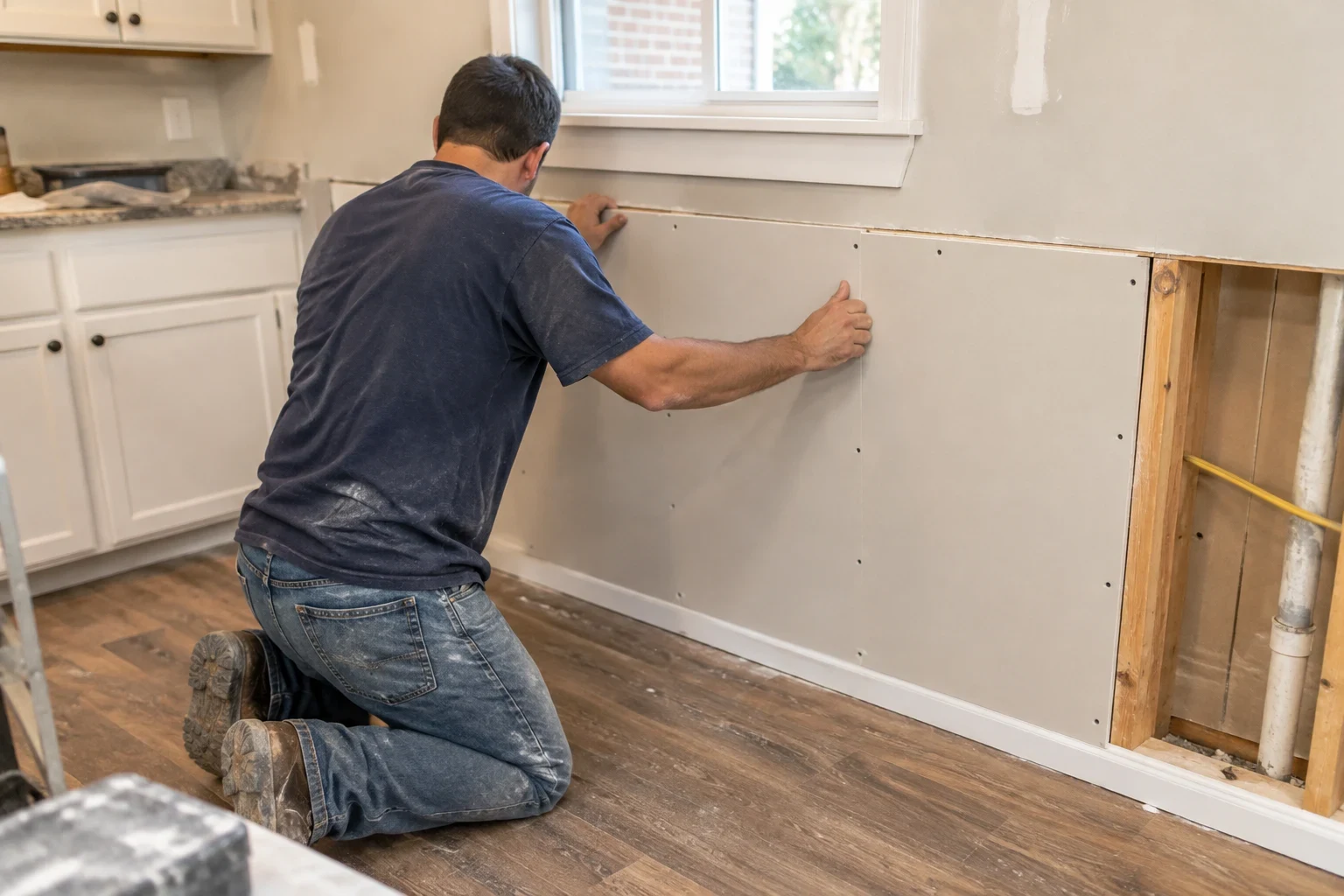
Once your home is dry, the walls, floors and insulation that came out need to go back in. We rebuild what the water damaged, from drywall and baseboards to subfloor and cabinets, and we replace wet insulation so the room holds heat and cool air again.
The Last Step of a Water Job
Water extraction and drying get the water out. Mold remediation handles any growth. Then someone has to put the room back together. We do that part too, so you are not hunting for a second contractor while your walls are open to the studs.
We only start rebuilding after moisture readings show the framing and subfloor are dry. Close up a damp wall and you trap water behind new drywall. That is how mold comes back a few months later.
It is also why we take insulation seriously. Wet fiberglass flattens and stops working. Soaked cellulose packs down and holds water. New insulation, with the gaps around it sealed, means the room stays comfortable and your heating and cooling don't have to work harder than they did before the leak.
What the Rebuild Covers
- Drywall and ceilings
- We hang, tape and finish new drywall where the old was cut out, then prime it. On ceilings and textured walls we match the existing finish as close as we can and tell you up front if a perfect match isn't possible.
- Insulation replacement
- We replace wet insulation in wall cavities, in the attic above a ceiling leak and in the crawl space under the floor. While the walls are open we seal gaps around pipes, wires and outlets, which cuts drafts you may have had for years.
- Subfloor and flooring
- Particleboard and OSB swell when they get wet and don't flatten back out. We cut out soft or swollen sections, put down new subfloor and install the finished floor on top.
- Trim, doors and cabinets
- Baseboards, door casing and the bottoms of base cabinets soak up water fast. We replace what is swollen or delaminated and reset what can be saved.
- Paint and final finish
- We use a stain-blocking primer over any area that had water marks so they don't bleed back through. Then we paint so the repaired wall blends with the rest of the room.
Signs Your Home Needs Repair Work
Walls left open after drying
Flood cuts and missing baseboards are normal after mitigation. They are not meant to stay that way, and open walls let conditioned air leak out.
A room that feels colder or stuffier
If a room has felt drafty in winter or hot in summer since the leak, the insulation behind the wall may be wet or packed down.
Soft spots or cupped floors
A floor that gives underfoot, or boards that curl at the edges, usually means the subfloor took on water.
Stains coming back through paint
A water mark that shows up again after you painted over it means the stain was never sealed, or the wall is still getting wet.
Swollen cabinets and trim
Cabinet bottoms that bulge and baseboards pulling off the wall won't go back on their own.
How a Rebuild Runs
- 1
Free on-site inspection
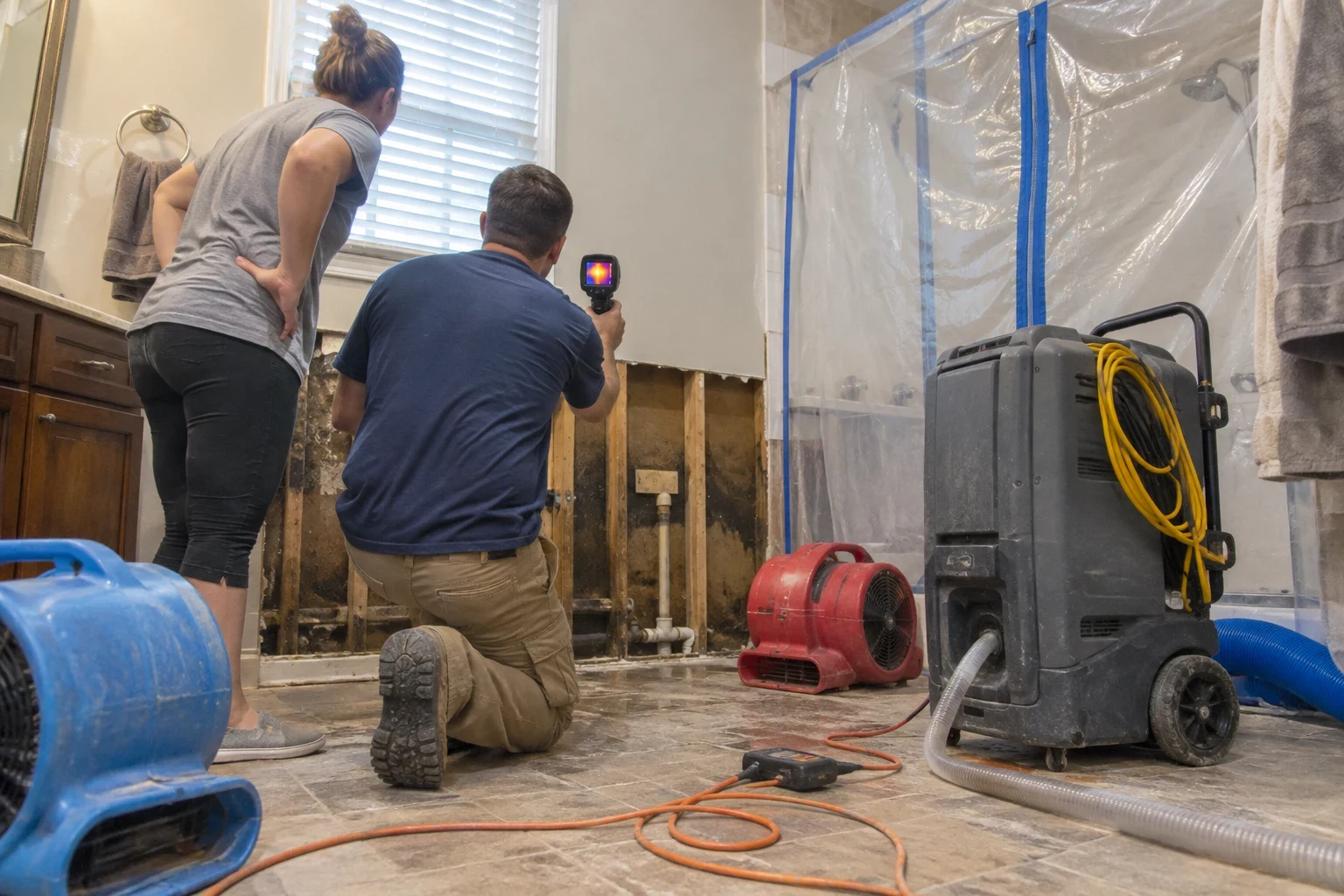
We look at the damage, take moisture readings and photos, and check what is behind the wall and under the floor. If anything is still wet, drying comes first.
- 2
Written scope
You get a line-item list of what we plan to replace and why. That same list helps with your insurance claim.
- 3
Protect the rest of your home
We cover floors, hang plastic to keep dust in the work area and keep a clear path in and out. Most people stay in the house during the work.
- 4
Rebuild in order
Framing repairs, then insulation and air sealing, then drywall, paint, flooring and trim. When the work calls for a permit, we pull it and schedule the inspection.
- 5
Walkthrough and cleanup
We walk the room with you, fix anything you point out and haul away all debris.
What Moves the Cost of a Rebuild
We can't give a fair number until we've seen the damage and what is behind it. Every rebuild is priced from a written scope that lists each item. You see what you are paying for, and nothing gets added without talking to you first.
- How high the water went
- A two-foot flood cut is a smaller job than full sheets of drywall from floor to ceiling. More wall area means more insulation and finishing too.
- What's under the surface
- Damaged framing, subfloor or wiring adds work that you can't see until the wall or floor is open.
- Materials and finishes
- Matching hardwood, tile or older cabinets takes more time and sometimes special-order parts. Standard drywall and vinyl plank go faster.
- Insulation and air sealing
- The area of wet insulation, and whether it is in walls, attic or crawl space, changes the labor involved.
- Permits and number of rooms
- Some repairs need a permit and inspection. Work spread across several rooms takes longer than one contained area.
Repairs and Rebuild Questions
Something not covered here? (804) 570-1965
Can you do the rebuild if another company did the drying?
Yes. Before we start, we take our own moisture readings. If the framing or subfloor is still wet, we show you the numbers and hold off so nothing gets closed up damp.
Does homeowners insurance cover rebuilding after water damage?
It depends on your policy and on where the water came from. A burst supply line is often handled one way, while groundwater or a leak that dripped for months may be treated another. Our photos, moisture readings and line-item scope go to your adjuster, and it helps that we work with most major insurance companies. The adjuster makes the coverage call, and we explain what we found so that call makes sense to you.
Why replace insulation that looks dry now?
The outside of the batt can dry while the inside stays matted and flat. Flattened insulation doesn't hold heat, so the room runs cold in winter and your heating system works harder. We check it first and only replace what is actually damaged.
How long will my home be torn up?
That depends on the job. One room with a flood cut goes faster than a kitchen that needs new cabinets and flooring. You get a schedule along with the written scope, and we tell you right away if something we find behind the wall changes it.
Can you match my existing floors and walls?
We match flooring, paint and wall texture as close as we can get. If an exact match isn't out there, we tell you before any work starts and go over options, such as carrying new flooring to a natural break like a doorway.
Get the Room Back in Use
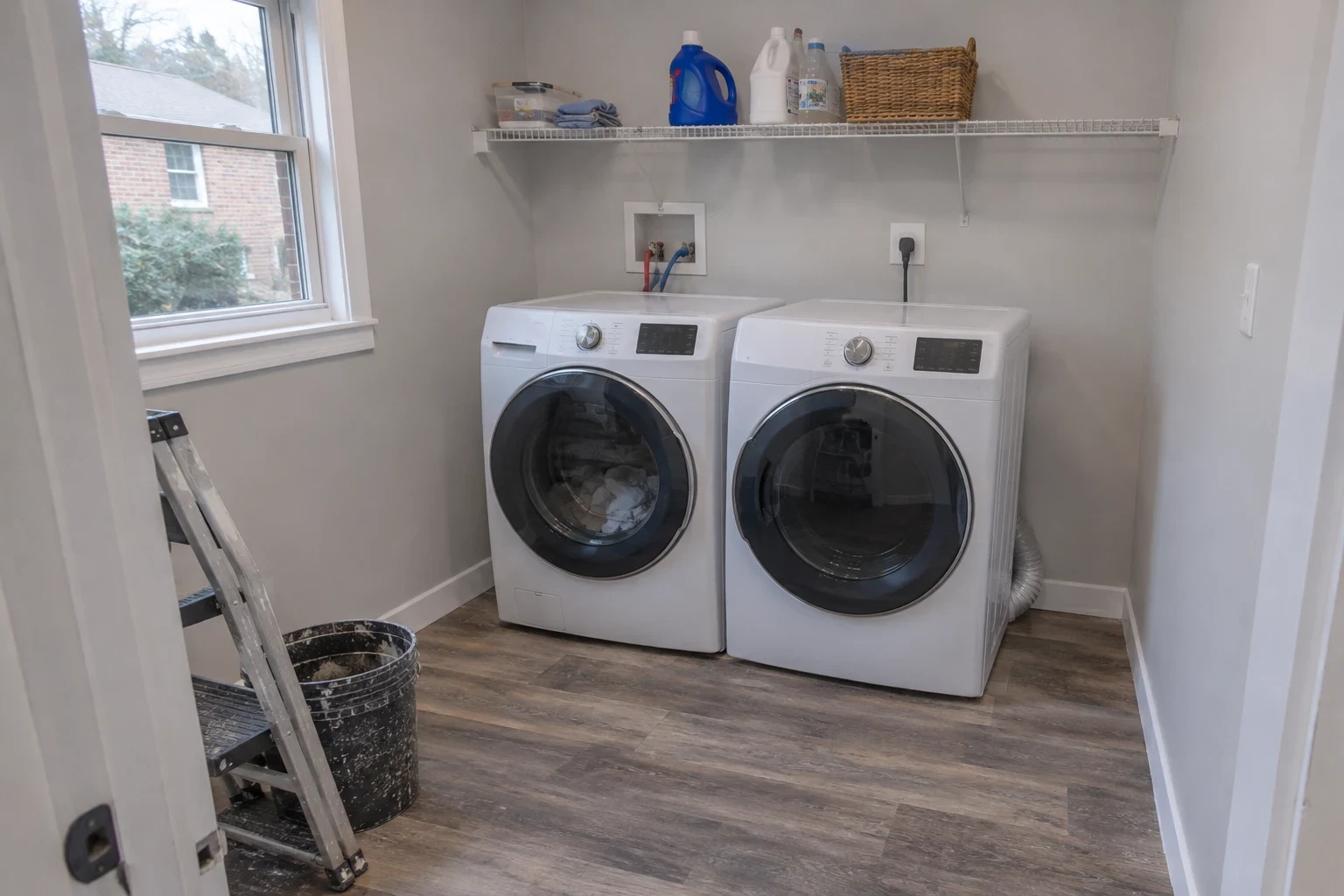
We aim to have a crew at your door within an hour of your call when water is still coming in, and we can walk you through the rebuild once things are dry. A quick call gets someone out to look.